How to Win at Blackjack: Basic Strategy Matrix, Mathematical Edge, and Table Selection
Most players lose money at blackjack because they treat the card table like a lottery. They rely on gut feelings, stand on soft totals out of fear, take insurance when they have a good hand, and split tens when greed takes over. The casino loves these players. Their erratic choices hand the house an edge between two and four percent.
That house edge is not fixed. Blackjack is unique among casino card games because every dealt hand alters the remaining deck, and the dealer is bound by rigid, predictable house rules. You make decisions; the dealer follows instructions. When you execute mathematically proven basic strategy on every single deal, the house edge plummets to under 0.5 percent. Over a weekend of play, that difference determines whether you walk away with profit or leave your bankroll in the dealer's tray. You can test these exact mathematical rules on Blackjack on Unicorn Games directly in your browser without risking actual cash.
The Mathematical Origin of Basic Strategy
In 1956, four mathematicians stationed at the Aberdeen Proving Ground in Maryland published a paper titled "The Optimum Strategy in Blackjack" in the *Journal of the American Statistical Association*. Roger Baldwin, Wilbert Cantey, Herbert Maisel, and James McDermott had no computers. They spent months running manual probability calculations on mechanical desktop adding machines.
A few years later, mathematician Edward O. Thorp verified their work using an IBM 704 mainframe at MIT. Julian Braun, an IBM engineer, refined the calculations across millions of simulated hands. Together, they proved that for every possible combination of player cards versus dealer upcards, exactly one decision yields the highest expected value.
Expected value is pure math. Every action you take at the card table carries a positive, neutral, or negative dollar return per hand. Basic strategy does not guarantee that you win every hand. That is impossible in a game governed by independent card distribution. Basic strategy guarantees that you make the play that loses the least money on bad hands and wins the most money on good hands.
Rule Zero: The 3:2 vs. 6:5 Payout Trap
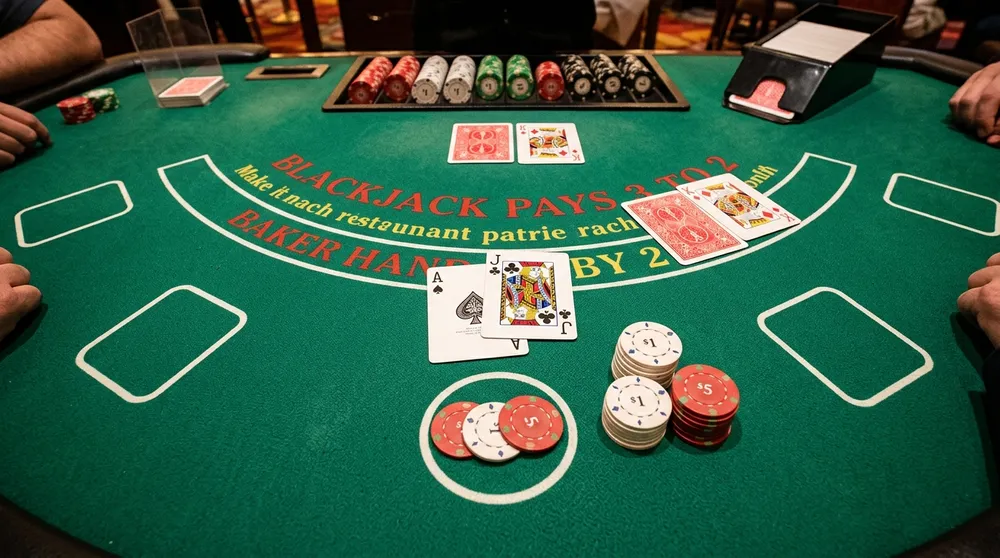
Before looking at card charts, inspect the felt. The text printed across the center of the table dictates your mathematical fate before you place a chip.
In traditional blackjack, a natural two-card twenty-one pays 3:2. If you bet ten dollars, the dealer hands you fifteen dollars in profit.
Many commercial casinos now slip 6:5 payout tables into their pits, especially on low-minimum tables. On a 6:5 table, your ten-dollar bet pays twelve dollars on a natural blackjack. You lose three dollars on every twenty-one you get.
That three-dollar reduction sounds minor to casual observers. In mathematical reality, it is devastating. Changing the natural payout from 3:2 to 6:5 adds 1.39 percent directly to the casino's house edge. It wipes out all the mathematical advantages of basic strategy in one stroke.
Never place a bet on a 6:5 table. Inspect the felt. If the table does not state "Blackjack Pays 3 to 2," stand up and walk away.
Dealer Upcard Probabilities and Bust Frequencies
The dealer's upcard is your only window into the dealer's potential finish. The dealer has no free will. The dealer must hit until reaching at least seventeen, and must stand on seventeen or higher.
Because the dealer must draw on sixteen, certain dealer upcards lead to frequent busts. Other upcards lead to made hands.
Review the dealer bust frequencies based on millions of multi-deck simulations:
Dealer Upcard 2: 35.3 percent bust rate
Dealer Upcard 3: 37.5 percent bust rate
Dealer Upcard 4: 40.3 percent bust rate
Dealer Upcard 5: 42.9 percent bust rate
Dealer Upcard 6: 42.1 percent bust rate
Dealer Upcard 7: 26.0 percent bust rate
Dealer Upcard 8: 24.4 percent bust rate
Dealer Upcard 9: 23.3 percent bust rate
Dealer Upcard 10 or Face: 21.4 percent bust rate
Dealer Upcard Ace: 11.7 percent bust rate
Notice the cliff between six and seven. When the dealer shows a 4, 5, or 6, the dealer busts over forty percent of the time. These are dealer bust cards. Your strategy against these cards centers on letting the dealer break while avoiding self-destruction.
When the dealer shows a 7, 8, 9, 10, or Ace, the dealer makes a pat hand seventy-four to eighty-eight percent of the time. These are strong cards. Your strategy against strong cards requires aggressive hitting, because standing on weak totals hands the dealer an automatic victory.
Hard Totals: The Foundational Matrix
A hard hand is any card combination that contains no Ace, or an Ace that must count as 1 to avoid exceeding twenty-one. Hard hands carry the greatest bust risk.
Hard 5 Through 8
Always hit. You cannot bust on a single card draw. Your hand is too weak to compete with any dealer total.
Hard 9
Double down if the dealer shows a 3, 4, 5, or 6. If the dealer shows any other card, take a hit. Doubling down allows you to double your original wager in exchange for receiving exactly one additional card. Against a weak dealer upcard, your 9 has a high probability of turning into a 19 while the dealer risks busting.
Hard 10
Double down if the dealer shows a 2 through 9. If the dealer shows a 10 or an Ace, hit. A hard 10 is an offensive weapon. With sixteen ten-value cards in a standard fifty-two card deck, your chances of catching a twenty are thirty point eight percent.
Hard 11
Always double down against any dealer upcard from 2 through 10. If the house rules dictate that the dealer hits soft seventeen, double down against an Ace as well. If the dealer stands on soft seventeen, hit against an Ace. Hard 11 is the single most profitable starting position in blackjack.
Hard 12
Stand if the dealer shows a 4, 5, or 6. Hit if the dealer shows a 2, 3, or 7 through Ace.
Amateur players frequently stand on 12 against a dealer 2 or 3. That is an error. The dealer's bust rate on a 2 is thirty-five percent, and on a 3 it is thirty-seven percent. That means the dealer makes a valid hand over sixty percent of the time. Your 12 is too fragile to survive without improvement. Take the hit.
Hard 13 Through 16
Stand if the dealer shows a 2 through 6. Hit if the dealer shows a 7 through Ace.
These are known as stiff hands. Any hit on a 13 through 16 risks an instant bust. Against dealer bust cards (2 through 6), your expected value is maximized by standing and letting the dealer take the risk of drawing. Against dealer strong cards (7 through Ace), standing loses more money than hitting.
Take Hard 16 against a dealer 10. If you stand, your expected value is minus 0.54 (you lose fifty-four cents per dollar bet). If you hit, you bust sixty-two percent of the time, but your expected value improves slightly to minus 0.53. Hitting loses less money than standing.
Hard 17 Through 21
Always stand. Never hit a hard seventeen or higher. The bust probability exceeds seventy-six percent, and you already hold a competitive total.
Soft Totals: Eliminating the Fear of the Ace
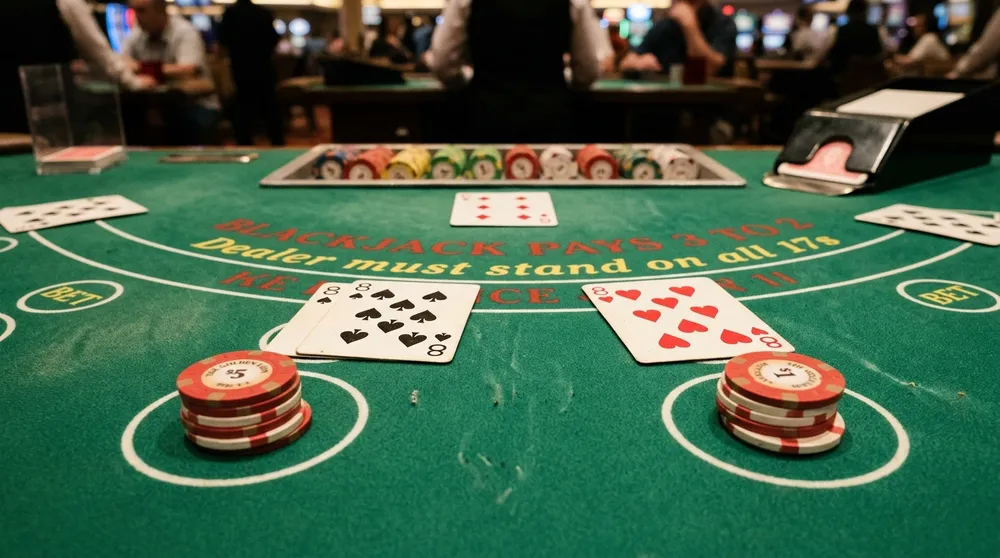
A soft hand contains an Ace that counts as 11 without pushing the total over twenty-one. Soft hands cannot bust on the next card. If you draw a high card, the Ace simply reverts to counting as 1.
Most casual players play soft hands terribly. They see a soft 17 or soft 18, think they have a good number, and stand. Standing on soft seventeen is one of the costliest errors at the table.
Soft 13 (Ace-2) and Soft 14 (Ace-3)
Double down against dealer 5 and 6. Otherwise, hit.
Soft 15 (Ace-4) and Soft 16 (Ace-5)
Double down against dealer 4, 5, and 6. Otherwise, hit.
Soft 17 (Ace-6)
Double down against dealer 3, 4, 5, and 6. Otherwise, hit.
Never stand on soft seventeen. A hard seventeen is mediocre; a soft seventeen is fluid. Since you cannot bust, hitting gives you an opportunity to improve to an 18, 19, 20, or 21 without downside. Doubling down against a weak dealer card pushes maximum chips onto the layout when the math favors you.
Soft 18 (Ace-7)
Double down against dealer 2, 3, 4, 5, and 6.
Stand against dealer 7 and 8.
Hit against dealer 9, 10, and Ace.
Soft 18 confuses players more than any other hand. Against a dealer 7 or 8, the dealer's most probable finish is seventeen or eighteen. Standing secures a win or push. Against a dealer 9, 10, or Ace, the dealer will likely finish with nineteen or twenty. Your eighteen is already a losing hand. You must hit to try for an improvement.
Soft 19 (Ace-8) and Soft 20 (Ace-9)
Always stand. If table rules specify that the dealer hits soft seventeen, double down with soft 19 against a dealer 6. Otherwise, lock in your high total.
Pair Splitting Rules
When your initial two cards carry identical face value, the dealer allows you to match your original wager and split the cards into two separate, independent hands.
Always Split Aces and Eights
A pair of Aces gives you two chances at twenty-one. Most casinos allow only one card per split Ace, but the expected value remains overwhelmingly positive.
A pair of eights totals a hard 16, which is the worst starting total in blackjack. Standing on sixteen against most cards is fatal; hitting sixteen frequently busts you. When you split eights, you discard that terrible 16 and start two hands with an 8. If you catch a ten on either hand, you convert a disaster into an 18.
Never Split Tens and Fives
A pair of tens gives you twenty. Twenty is a winning hand in over eighty-five percent of showdowns. Breaking up a twenty to chase two uncertain hands is foolish greed.
A pair of fives is a hard 10. You never split fives because two starting hands of five are weak. Treat a pair of fives as a hard 10 and double down against a dealer 2 through 9.
Split Twos, Threes, and Sevens
Split 2s and 3s against dealer 4 through 7. If the table allows doubling after split, split them against dealer 2 and 3 as well.
Split 7s against dealer 2 through 7. Against an 8, 9, 10, or Ace, take a hit.
Split Fours Only Under Specific Rules
Never split 4s unless the casino allows doubling down after splitting, and the dealer shows a 5 or 6. If those conditions are not met, hit your hard 8.
Split Sixes Against Weak Upcards
Split 6s against dealer 3 through 6. If doubling after split is permitted, include dealer 2. If the dealer shows a 7 or higher, hit.
Split Nines With One Critical Exception
Split 9s against dealer 2, 3, 4, 5, 6, 8, and 9.
Stand when the dealer shows a 7, a 10, or an Ace.
Look at the dealer 7. Your pair of nines equals 18. If the dealer shows a 7, the dealer's most probable in-the-hole card is a ten, giving the dealer seventeen. Your eighteen already beats the dealer's likely seventeen. Do not break up a winning hand. Stand.
Late Surrender: The Smart Player's Escape Hatch
Late surrender allows a player to forfeit their hand after the dealer checks for blackjack, giving up half their bet while reclaiming the other half. Many players view surrender as cowardice. Professional players view surrender as a financial life jacket.
Consider the math of a hard 16 against a dealer 10. If you hit, you lose fifty-three cents per dollar bet. If you stand, you lose fifty-four cents per dollar bet.
If you surrender, you lose exactly fifty cents per dollar bet.
Surrendering saves you three to four cents on every dollar wagered on that hand. Over ten thousand hands of blackjack, those small savings preserve hundreds of dollars in capital.
Apply surrender in these exact situations:
Surrender hard 16 against dealer 9, 10, or Ace.
Surrender hard 15 against dealer 10.
If the table plays under dealer hits soft seventeen rules, surrender hard 15 against a dealer Ace as well.

The Insurance Bet: Analyzing the Mathematics of a Trap
When the dealer shows an Ace, the house offers insurance before checking the hole card. Insurance costs up to half your original wager and pays 2:1 if the dealer holds a ten-value card in the hole.
Casinos present insurance as protection. In mathematical terms, insurance is a sucker bet with a brutal house edge.
In a standard multi-deck shoe, exactly sixteen cards in every fifty-two card set carry a value of ten (10s, Jacks, Queens, Kings). That means thirty-six cards are not tens.
The probability of the dealer having a ten in the hole is sixteen divided by fifty-two, or 30.77 percent. The probability of the dealer not having a ten is 69.23 percent.
Calculate the expected value on a ten-dollar insurance bet:
Thirty point seven seven percent of the time, you win twenty dollars.
Sixty-nine point two three percent of the time, you lose ten dollars.
Multiply the probabilities: (0.3077 * $20) - (0.6923 * $10) = $6.15 - $6.92 = -$0.77.
You lose an average of seventy-seven cents on every ten dollars wagered on insurance. That gives the casino an edge of 7.69 percent on that side bet.
Even when you hold a natural blackjack and the dealer offers "even money" (which is mathematically identical to taking insurance), decline it. Over the long run, taking even money costs you cash. Never take insurance under any circumstance.
The Four-Step Decision Sequence for Every Hand
When the dealer slides cards across the felt, avoid jumping straight to hitting or standing. Process every decision through a four-tier sequential checklist:
1. Step 1: Check Surrender. Is my hand eligible for surrender, and does the dealer upcard warrant folding half my bet?
2. Step 2: Check Split. Do I hold a pair, and does the basic strategy split matrix call for separating them against this upcard?
3. Step 3: Check Double Down. Does my hard or soft total qualify for doubling against the dealer's visible card?
4. Step 4: Hit or Stand. If neither surrender, splitting, nor doubling applies, should I draw an additional card or stand on my total?
Following this four-step sequence eliminates cognitive fatigue. You do not debate possibilities. You filter the board through four logical checkpoints and act.
Frequently Asked Questions
Yes. A dealer showing a 7 has an eighty-two percent chance of finishing with seventeen or higher, and only an eighteen percent chance of busting. Standing on 16 gives you an eighty-two percent chance of losing. Hitting 16 will bust you sixty-two percent of the time, but the thirty-eight percent chance of improving gives you a higher win probability than standing.

Game developer and founder at Unicorn Games. Specializes in combinatorial game theory, solvability algorithms, and classic card & puzzle game development. Every guide is fact-checked against mathematical game states and empirical play benchmarks.