Welcome to Unicorn Games: The Architecture of Instant Browser Play
Web gaming broke fifteen years ago. Flash died, app stores locked down mobile devices with thirty percent fees, and casual browser games turned into ad-stuffed traps.
A player clicking a link to run a quick hand of cards expects the game to open immediately. Instead, they hit two megabytes of tracking scripts, three unskippable video ads, and a loading bar that chokes on cellular data. When the game finally boots, it runs inside an unoptimized wrapper that heats up the phone and drains ten percent of the battery in five minutes.
Unicorn Games exists to reverse that decline. We build games for people who want to play immediately on whatever screen sits in front of them. No app store accounts. No fifty-megabyte downloads. No tracking walls.
The Core Technical Rule: Zero Heavy Dependencies
Most modern web games rely on heavy third-party game engines like Phaser, Pixi.js, Godot exports, or Unity WebGL bundles. Those engines carry immense utility for 3D action titles or massive physics sandboxes. For classic card, puzzle, and board games, they represent pure bloat. A standard Unity WebGL build pulls down twenty to thirty megabytes of compressed WebAssembly binaries before rendering its opening title card.
We write our games using direct HTML5 Canvas 2D contexts and raw TypeScript.
The difference in execution speed shows up immediately. When you open Klondike Solitaire on Unicorn Games, the entire initial bundle weighs less than two hundred kilobytes. The canvas renders within three hundred milliseconds of the initial HTTP request. Every card movement runs at sixty frames per second on a five-year-old budget smartphone.
Running without engine bloat changes battery consumption. A lightweight Canvas renderer draws pixels to the screen only when the board state changes. If you pause between moves to think through a sequence in FreeCell Solitaire, the browser loop idles. CPU utilization drops near zero. The phone stays cool in your hand.

Separation of Game Math and Visual Rendering
A common failure in amateur web game programming is tying game rules directly to DOM manipulation or screen coordinates. When card values live inside HTML <div> attributes, game logic slows to a crawl, and writing automated test suites becomes impossible.
We separate every title into two decoupled systems: a headless state machine and an isolated visual renderer.
The state machine handles the mathematics. It knows nothing about pixels, screen aspect ratios, or mouse clicks. It accepts integer inputs, runs deterministic transition logic, and outputs an updated game state. Because the engine operates as pure data, we run hundred-thousand-deal simulations in headless Node environments to measure win rates and eliminate unwinnable board states. You can see this methodology in our research data on solitaire solvability.
The visual renderer acts as an observer. It reads the raw state numbers and draws them to the canvas using fractional screen coordinates. When a player drags a card across the felt, the rendering loop tracks input coordinates on the active frame while the underlying game board waits for a valid drop event before updating state. This split eliminates logic glitches, prevents desync bugs, and allows identical game rules to power desktop, tablet, and mobile views without code duplication.
Input Latency and Touch Geometry
Desktop browser gaming uses precise optical mice with single-pixel pointer accuracy. Mobile browser gaming uses thumbs covering eighty square millimeters of glass.
If you port a desktop interface to mobile screens without changing the hit-box geometry, players misclick constantly. They try to select the seven of clubs and accidentally drag the eight of diamonds sitting above it.
We build mobile hit-boxes with generous touch padding that extends beyond visible card borders. The touch resolver uses proximity weighting: if your thumb lands between two overlapping cards in a column, the engine evaluates which card has a legal destination on the current board and assigns priority to the playable move.
Physical response time matters just as much as geometry. When a player taps a card, visual feedback must appear on the current screen refresh cycle. Delaying response while waiting for audio files to load or network pings creates perceived lag. Our event listeners register touch start events directly without synthetic click delays, initiating canvas transforms within sixteen milliseconds.
Deterministic Shuffling and Algorithmic Fair Play
Card games depend on shuffle integrity. Randomness in software is difficult to get right, and amateur implementations frequently introduce statistical biases that ruin card distribution.
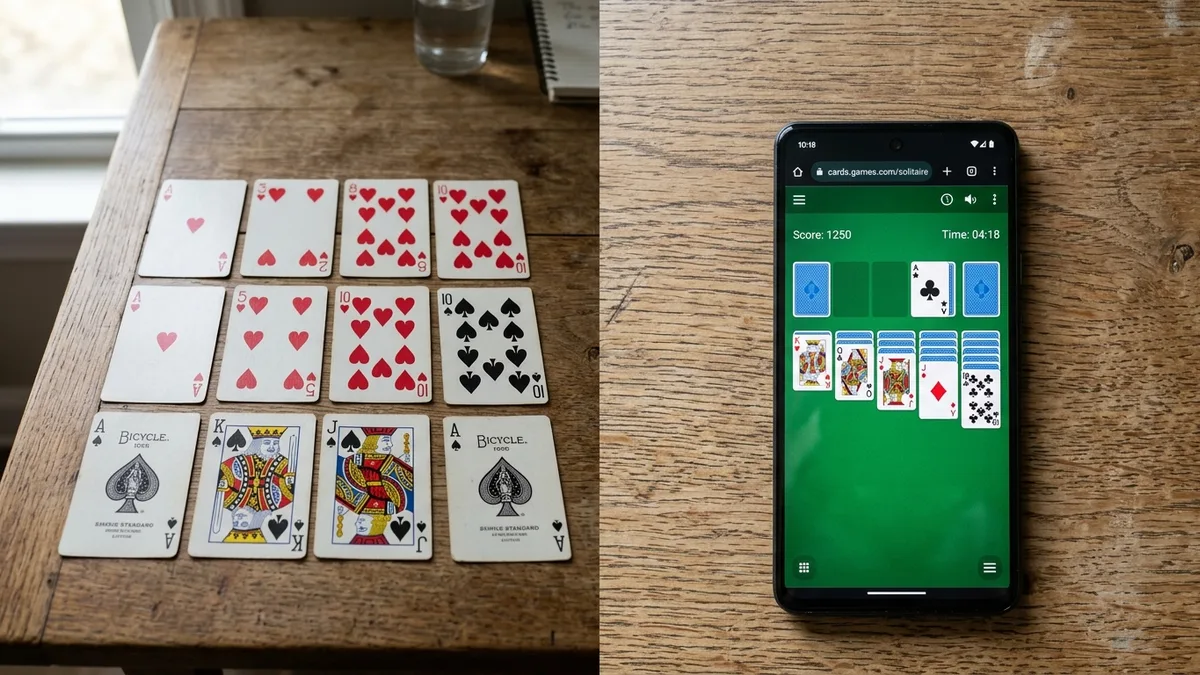
We use the Fisher-Yates shuffle powered by cryptographically secure pseudo-random number generators via the browser Web Crypto API. Every card in the fifty-two card deck has an exact, unweighted 1/52 probability of landing in any position.
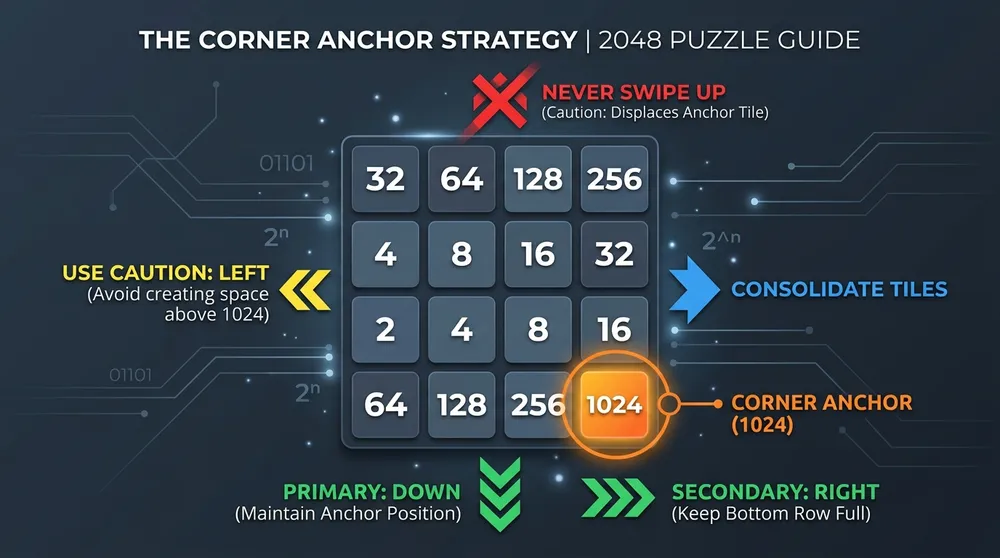
In games like Blackjack on Unicorn Games, the deck shoe models standard casino distribution down to the cut card. In tactical grid titles like 2048, tile spawns follow strict mathematical odds: ninety percent twos and ten percent fours, distributed across available open cells without algorithmic interference. You win through skill and planning, not because hidden game logic tipped the odds to keep you playing.
Offline Readiness and Progressive Web Applications
A browser game should work on an airplane or inside a subway tunnel.
Unicorn Games implements service worker caching across all assets. Once you load a game like Solitaire or Minesweeper in your browser, the service worker caches the static HTML, canvas logic, sprite sheets, and audio files onto your local device storage. If your internet connection drops mid-game, nothing breaks. You can refresh the page, close the browser, or reopen the link in airplane mode, and the game launches instantly.
You can also install any game directly to your device home screen. Chrome on Android and Safari on iOS allow one-tap installation as a Progressive Web App. The browser chrome disappears, granting full-screen space with native app feel, zero app store surveillance, and zero storage overhead.
Frequently Asked Questions
No. Every game is open to play immediately without registration, email capture, or phone verification. Your high scores and personal statistics save locally inside your browser storage.

Game developer and founder at Unicorn Games. Specializes in combinatorial game theory, solvability algorithms, and classic card & puzzle game development. Every guide is fact-checked against mathematical game states and empirical play benchmarks.