Chess With Friends

Save your progress

Sync scores & stats across devices

⚡
Unicorn Games
Chess With Friends
Chess With Friends
Strategy3.9K
Advertisement

Save your game progress

About the Game Chess With Friends

Released in September 2026 • Categories:strategyboardmultiplayer

Unicorn GamesUnicorn Games✓
4.9/ 5.0

231 ratings

Rate this game:
Click a star to submit your rating

Looking for the purest battle of wits? Play Chess or test your melding speed in Gin Rummy and card-counting precision in Blackjack.

Chess: The Definitive Duel of Strategy, Space, and Calculation

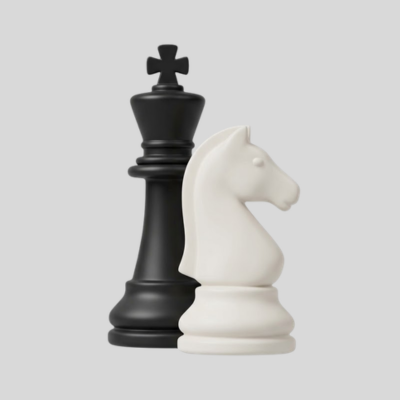
Chess strips away all elements of luck. There are no dice. There are no concealed cards. Every piece stands in plain sight across sixty-four squares. You face an opponent with identical starting resources and a single mandate: hunt down and trap the enemy King. The tension begins on move one. White claims the initiative; Black fights to equalize and counterpunch. Every pawn push permanently alters the board terrain, creating outposts or leaving gaping weaknesses that echo forty moves later. One tactical blunder shatters hours of patient positional pressure. Play with calculated precision, and you orchestrate a board-wide squeeze. Hesitate, and your opponent cuts through your defenses with an unstoppable checkmate attack.

Video Tutorial

📺 Video TutorialWatch on YouTube↗

The Origins and Royal Lineage of Chess

Chess traces its earliest roots to sixth-century India, where it was known as Chaturanga. The game mirrored the four divisions of the ancient Indian military: infantry (pawns), cavalry (knights), elephants (bishops), and chariots (rooks). It traveled along trade routes to Sasanian Persia as Shatranj. The Persian exclamation "Shah Mat" ("the King is helpless") gave birth to the modern word "checkmate."

Following the Islamic conquest of Persia, the game spread across the Mediterranean into medieval Europe. In late fifteenth-century Spain and Italy, the rules underwent a revolutionary transformation. Players empowered the Queen from a weak, short-range counselor into the most destructive piece on the board and granted the Bishop unlimited diagonal range. This lightning-fast variant, initially nicknamed "Mad Queen Chess," quickly replaced all older forms. By the nineteenth century, international tournaments in London and Paris established standardized rules, chess clocks, and formal notation. From the historic 1972 Cold War showdown between Bobby Fischer and Boris Spassky to modern engine analysis, Chess remains the gold standard of competitive intellect.

Board Setup and Piece Powers

Chess is played on an eight-by-eight grid of 64 alternating light and dark squares. The board must always be placed with a light-colored square in the bottom-right corner ("white on right").

The second rank holds eight pawns. The back rank lines up from left to right: Rook, Knight, Bishop, Queen, King, Bishop, Knight, Rook. The Queen always starts on her matching color ("white Queen on white, black Queen on black").

Piece values and movement rules:

  • Pawns (Value: 1): Move forward one square at a time, but have the option to advance two squares on their very first move. Pawns capture diagonally forward one square. They cannot move or capture backward.
  • Knights (Value: 3): Move in a strict L-shape (two squares in one direction, then one square perpendicular). Knights are the only pieces on the board capable of jumping over friendly or enemy units.
  • Bishops (Value: 3): Move diagonally across any number of unoccupied squares. Each player starts with one light-squared bishop and one dark-squared bishop, which remain locked to their respective color complexes for the entire match.
  • Rooks (Value: 5): Move horizontally or vertically across any number of open squares. Rooks form powerful artillery along open files and ranks.
  • Queen (Value: 9): Combines the linear power of the rook with the diagonal reach of the bishop. She can move any number of open squares in any straight or diagonal direction.
  • King (Invaluable): Moves exactly one square in any direction. The King cannot be captured; the game ends immediately when he is trapped in checkmate.
  • Special Rules and Turn Mechanics

    White always moves first, followed by alternating turns. A player can never skip their turn.

    Three unique special maneuvers govern competitive play:

  • Castling: A dual-purpose move executed with the King and a Rook. The King moves two squares toward the Rook, and the Rook hops over the King to the adjacent square. Castling is legal only if neither piece has moved yet, all intervening squares are empty, and the King is neither currently in check nor passing through squares attacked by enemy pieces.
  • En Passant: A special diagonal pawn capture. If an opponent advances a pawn two squares forward to land directly alongside your fifth-rank pawn, you may capture that pawn diagonally as if it had only moved forward one square. You must execute this capture immediately on the following move, or the right is permanently lost.
  • Pawn Promotion: When a pawn battles its way to the opposite eighth rank, it is instantly transformed into a Queen, Rook, Bishop, or Knight of your choice, regardless of whether those pieces are already on the board.
  • The Objective: The Hunt for Checkmate

    The sole objective in Chess is to deliver checkmate against the opposing King.

  • Check: When a piece directly attacks the enemy King. The defender must escape check immediately by moving the King, blocking the check with another piece, or capturing the attacking unit.
  • Checkmate: When the King is placed in check and has no legal moves to escape. The game ends instantly in a decisive victory.
  • Draw (Tie): A match can end in a draw under five specific conditions: Stalemate (the player whose turn it is has no legal moves and is not in check), Insufficient Material to force mate, Threefold Repetition of the exact same position, the 50-Move Rule (fifty consecutive moves without a capture or pawn push), or Mutual Agreement between players.
  • Step-by-Step Strategic Guide to Victory

  • Step 1: Stake Early Claim to the Center: Open with pawns to e4 or d4. Central squares (e4, d4, e5, d5) act as the high ground of the board. Controlling the center gives your pieces rapid transit across both flanks.
  • Step 2: Develop Minor Pieces Before Moving the Queen: Bring your Knights out to f3 and c3, and your Bishops to active diagonals. Avoid moving the same piece twice in the opening, and keep your Queen back until your minor army is deployed.
  • Step 3: Castle Early for King Safety: Complete castling within the first seven to ten moves. Leaving your King stranded in the center invites rapid tactical break-ins along open files.
  • Step 4: Seize Open Files with Heavy Rooks: Place your rooks on files completely cleared of pawns. Penetrating to the seventh rank with a rook paralyses enemy pawns and traps the opposing King on his back rank.
  • Step 5: Activate the King in the Endgame: Once Queens and minor pieces leave the board, the King transforms from a liability into a formidable attacking piece. March your King toward the center to escort passed pawns toward promotion.
  • Tactical Playbook for Master Players

  • The Fork: Use a single piece to attack two or more enemy targets at the exact same moment. Knights are lethal forkers because their jumping movement cannot be blocked.
  • The Pin: Attack an enemy piece that shields an even more valuable piece behind it. An absolute pin freezes a piece against its King, making any move illegal. A relative pin targets pieces shielding the Queen or a Rook.
  • The Skewer: The reverse of a pin. Attack a high-value piece directly, forcing it to move aside and leaving a secondary target exposed to capture behind it.
  • Discovered Attacks and Double Checks: Move one piece out of the way to uncover an ambush attack from a Rook, Bishop, or Queen waiting behind it. A double check forces the enemy King to move, because blocking two attackers at once is physically impossible.
  • About the Unicorn Games Chess Experience

    Clean, zero-latency chess straight in your browser. Train against an intelligent engine powered by Minimax algorithms and alpha-beta pruning, or match up against live human players across synchronized clocks. No downloads, no required sign-ups, and no intrusive ads. Once you sharpen your tactical edge in Chess, test your card combinations in Gin Rummy, negotiate trump contracts in Spades, evade penalties in Hearts, or collect sets in Go Fish.

    We Value Your Feedback

    Have suggestions for engine difficulty levels, spotted a display glitch, or want custom time controls added? Contact our team directly through our Contact Page or email us at g@unicorn.games. We read every message and respond promptly.

    Controls

    Move Chess PieceClick / Drag
    Drag and drop or click a piece to see valid moves, then click the target square to make your move.
    Supports Keyboard, Mouse & Touch

    Frequently Asked Questions

    Quick answers about Chess With Friends gameplay, rules, solvability guarantees, and unblocked access.

    Yes, you can play chess instantly in your browser against automated AI bot opponents with multiple difficulty levels and no registration required.

    Yes! Click the 2-Player or Challenge a Friend button to generate a private room link. Send the link to a friend to start playing immediately with zero downloads.

    Yes, all official chess rules including castling (kingside and queenside), en passant captures, pawn promotion, and 50-move draw rules are fully supported.
    You Might Also Like Chess With Friends

    View All →